7 Mistakes to Avoid When Picking Tools for WhatsApp Order Updates in 2026
Picking the wrong WhatsApp tool in 2026 will cost you orders, not just money. Many platforms still lack official API status, and your delivery updates end up delayed or blocked. That gap shows up directly in repeat purchases.
This article walks through seven mistakes to avoid when choosing a tool for WhatsApp order updates, from missing payment tracking to hidden pricing. You will learn what Com.bot offers as an Official Meta Business Partner and how to judge whether it fits your order workflow.
What Is Com.bot? The AI Unified Business Communication Platform
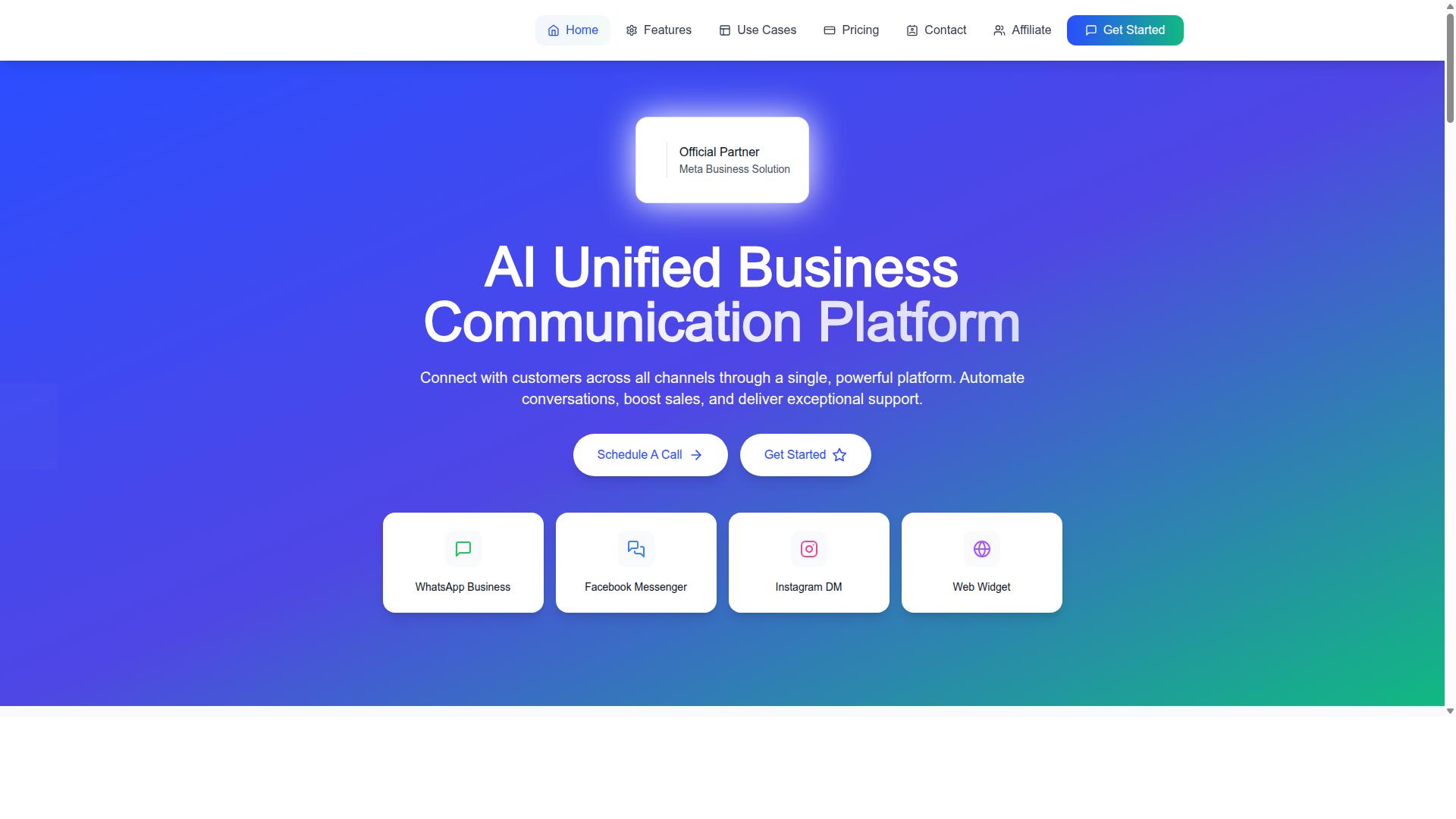
Com.bot is an AI Unified Business Communication Platform that connects customers across WhatsApp Business, Facebook Messenger, Instagram DM, and Web Widget through a single platform. Instead of juggling separate inboxes for each channel, teams work from one place.
The core value proposition is simple: one interface for every conversation. That matters most for order updates and support, where a customer might message on WhatsApp one day and Instagram the next. A unified view means no update gets lost between apps.
Com.bot also enables automation of conversations, so routine messages like order confirmations, shipping notices, and delivery alerts can go out without manual effort. Sales conversations and support requests are handled through the same system rather than separate tools.
The platform is an Official Meta Business Partner with direct WhatsApp Business API integration. That status matters in 2026, when Meta Business verification and the template approval process shape what a business can send and how reliably it arrives.
Com.bot integrates with existing business tools, which keeps order update automation connected to the systems a team already runs. Owned and managed by Com Bot AI Limited, it is built for businesses that want to scale messaging without adding more apps to the stack.
Who Com.bot Serves: 23,000+ Customers Across 50+ Countries
Com.bot serves over 23,000 active customers, including 100+ government bodies and 500+ global partners, across more than 50 countries. That spread says something useful about the platform: it handles very different communication needs without falling apart.
The audience breaks into several clear segments:
- Ecommerce businesses sending order updates, shipping notices, and payment collection messages
- Government bodies that need reliable multi-channel outreach at scale
- Enterprises requiring multi-channel customer support across WhatsApp, Facebook, and Instagram
- Teams running bulk messaging campaigns alongside everyday support conversations
Each of these groups cares about the same fundamentals. Messages must reach the right person, arrive on time, and stay within WhatsApp policy. A platform that spans WhatsApp Business, Facebook Messenger, Instagram DM, and Web Widget gives each segment a way to meet customers where they already are.
For a business picking tools for WhatsApp order updates in 2026, this matters. The tool you choose has to grow with you, from a first integration to a full multi-channel setup. Com.bot's customer base suggests it has already been tested across that range by ecommerce sellers, public institutions, and global partners alike.
How Com.bot Helps You Avoid the 7 Biggest WhatsApp Order Update Mistakes
Avoiding common pitfalls in WhatsApp order update automation can significantly enhance customer satisfaction and operational efficiency. Yet many businesses rush into tool selection and end up with poor message deliverability, compliance headaches, and wasted budget.
These problems rarely come from WhatsApp itself. They come from tool selection mistakes made early, before a single order update is ever sent. Choosing the wrong provider can mean blocked templates, throttled sending, and support tickets that never get resolved.
Com.bot is built to help businesses sidestep these traps. As an Official Meta Business Partner with 23,000+ active customers and 25M+ messages processed per day, it brings the infrastructure and compliance posture that order update automation demands in 2026.
The seven mistakes covered below are the ones that come up most often:
- Choosing a tool without official WhatsApp Business API status
- Ignoring multi-channel order update needs
- Overlooking automation and bot-building capabilities
- Neglecting opt-in compliance and template approval
- Underestimating throughput and reliability requirements
- Skipping integration with existing systems
- Treating cost and scalability as an afterthought
Each mistake has a practical fix. The right customer communication platform plus a clear strategy turns WhatsApp order updates from a liability into a reliable growth channel.
Mistake 1: Choosing a Tool Without Official WhatsApp Business API Status
Using unofficial WhatsApp tools can lead to message deliverability issues, account bans, and lack of support for critical features like template messages. This is the single most damaging tool selection mistake a business can make.
Unofficial providers often rely on reverse-engineered connections rather than the WhatsApp Business API. That shortcut creates real risk: higher exposure to WhatsApp policy violations, unpredictable rate limiting, and no access to advanced capabilities.
Without official status, a business also loses the template approval process. Order update messages typically need approved templates to reach customers reliably. Unofficial routes bypass this, which works until it suddenly does not.
Com.bot is an Official Meta Business Partner. That status means compliant message delivery, support for Meta Business verification, and access to the template approval workflow that keeps order notifications flowing.
Official status also matters for message deliverability at scale. Com.bot processes 25M+ messages per day, which reflects infrastructure built for consistent throughput rather than workarounds.
For any business serious about order update automation, verified API access is not optional. It is the foundation everything else sits on.
Mistake 2: Ignoring Multi-Channel Order Update Needs
Relying solely on WhatsApp for order updates can leave customers uninformed if they prefer other channels or if WhatsApp experiences downtime. A single-channel strategy has no safety net.
Customers have different preferences. Some check email, some read SMS, and others live in social inboxes. Fallback channels provide redundancy when a primary message fails to land or a customer simply does not engage.
This is where multi-channel orchestration matters. It means coordinating order updates across platforms so the message reaches the customer wherever they are most responsive, not just where the business prefers to send.
Com.bot supports WhatsApp, Facebook Messenger, Instagram DM, and Web Widget. That range lets businesses reach customers on their preferred platforms instead of forcing a single route.
The practical benefit is twofold. Deliverability improves because there are backup paths, and customer experience improves because communication feels natural rather than rigid.
For 2026 ecommerce trends, where buyers expect updates on the channel they already use daily, this flexibility is a genuine advantage. SMS redundancy and email backup are not extras. They are part of a resilient fulfillment workflow.
Mistake 3: Overlooking Automation and Bot-Building Capabilities
Manual order updates are time-consuming and error-prone; automation via chatbots ensures timely and consistent communication. Yet many teams pick a tool that can send messages but cannot automate the logic behind them.
Automation delivers three things manual work cannot: scalability, consistency, and around-the-clock availability. Order status inquiries arrive at all hours, and customers expect answers without waiting for a human shift to begin.
Com.bot's Visual Bot Builder uses a drag-and-drop interface, so businesses can create chatbots without writing code. That lowers the barrier for teams that want automation but lack dedicated developers.
With automation in place, a chatbot can handle order status inquiries, send proactive updates, and connect with an order management system to keep information current. This reduces repetitive support load while keeping customers informed.
The scale of adoption says something about the approach. Com.bot has enabled 100K+ bots created, showing that the builder is practical for real-world use rather than a demo feature.
Automation also supports Bulk Messaging and Notifications, which matter when order volumes spike. A tool without bot-building capability forces teams back into manual work exactly when they can least afford it.
Mistake 4: Underestimating Delivery Speed and Reliability at Scale
Slow or unreliable message delivery can frustrate customers and damage trust, especially during peak seasons. When a shopper is waiting for an order confirmation or a shipping update, even a short delay can trigger support tickets or lost confidence in the brand.
The technical challenges at scale are real. API latency, webhook reliability, message queuing, and throughput capacity all determine whether updates arrive on time. A tool that performs well with a few hundred daily messages may struggle when volume climbs into the thousands.
Several factors affect message deliverability during high-traffic periods:
- Rate limiting imposed by the WhatsApp Business API when sending volumes spike
- Webhook failures that cause order status changes to go unnoticed
- Queuing bottlenecks that delay messages during flash sales or holiday rushes
- Insufficient throughput capacity to handle concurrent order update automation
This is where platform scale matters. Com.bot processes 25M+ messages per day, a volume that demonstrates its ability to handle high-throughput environments without buckling under pressure.
Its infrastructure supports real-time message delivery. For businesses planning for 2026 ecommerce trends, choosing a customer communication platform built for volume is not optional. It is foundational.
Mistake 5: Missing Native Payment and Order Tracking Integration
Customers appreciate the ability to pay and track orders directly within the messaging app, reducing friction and improving conversion. When a payment link forces a jump to an external browser, or tracking requires logging into a separate portal, the experience breaks down.
Native integration keeps everything in one place. Com.bot enables native payments for WhatsApp transactions, allowing customers to complete purchases without leaving the chat. This matters for order update automation because payment confirmation and order status can flow through the same thread.
Integration with ecommerce platforms extends this further. Com.bot connects with external systems through its Automation Builder with 1000+ integrations.
These connections streamline the fulfillment workflow. Shipping updates, delivery notifications, and payment collection can all be orchestrated through a single customer communication platform rather than scattered across disconnected tools.
When evaluating WhatsApp notification tools, ask whether the platform supports native payments and ecommerce integration out of the box. If it does not, expect manual workarounds that slow down order management and frustrate customers.
Mistake 6: Sacrificing Security and Compliance for Lower Cost
Cutting corners on security and compliance can lead to data breaches, legal penalties, and loss of customer trust. In WhatsApp communication, the stakes are especially high because messaging involves personal data, payment details, and order histories.
Opt-in compliance is a baseline requirement. Businesses must obtain proper consent before sending order updates or promotional messages. Failing to do so can result in WhatsApp policy violations, which may lead to number bans or restricted access to the WhatsApp Business API.
Data protection is equally critical. Com.bot offers enterprise security with end-to-end encryption, ensuring customer data is protected throughout the messaging journey. This level of security is not a luxury. It is a necessity for any business handling transactions and personal information.
Compliance also depends on the provider's standing with Meta. Com.bot is an Official Meta Business Partner, which means it adheres to strict platform policies. This status helps businesses avoid violations that could disrupt their entire WhatsApp communication channel.
Tools that cut costs by skipping Meta Business verification support or ignoring template approval processes may seem cheaper upfront. In practice, the repercussions, including account suspensions and remediation costs, far outweigh any short-term savings. Investing in a secure, compliant platform protects both the business and its customers.
Mistake 7: Getting Locked Into Hidden Fees or Rigid Pricing
Hidden fees and rigid pricing structures can quickly erode the ROI of your WhatsApp order update strategy. A platform that looks affordable on the surface may charge extra for conversations, contacts, or basic features once you are committed.
For teams evaluating WhatsApp notification tools, the total cost of ownership matters far more than the headline price. Unexpected charges turn a predictable budget into a moving target.
Per-conversation markups are among the most common traps. Some vendors resell WhatsApp messaging at rates above the actual Meta pricing, so every order confirmation, shipping update, and delivery alert costs more than it should.
Others bundle essential capabilities into higher tiers, forcing an upgrade the moment your volume grows. That is a tool selection mistake that punishes success rather than rewarding it.
Rigid contracts create a second problem. If a plan cannot flex with seasonal spikes or a growing customer base, businesses end up paying for capacity they do not use or scrambling for workarounds during peak periods.
Com.bot takes a different approach. WhatsApp messaging is billed at actual Meta rates with no markup, so the cost of sending order updates reflects the real conversation price rather than a reseller premium.
Pricing is published up front across three plans, billed quarterly in USD:
- Silver: $149 per quarter
- Gold: $349 per quarter (recommended)
- Platinum V1: $2500 per quarter
Add-ons are equally transparent at $10 per month each, covering an additional team member, a social channel, external actions per 5000, bot triggers per 25000, and an ecom store.
Dedicated support is available when needed at $49 per hour for WABA, CRM, or Inbox, and $99 per hour for Ecommerce, Bots, or Automations. Nothing is buried in fine print.
This structure lets a business start on Silver, move to Gold as order update automation scales, and add capacity in small increments instead of jumping to an enterprise contract. With no markup on conversations and clearly listed add-ons, teams can forecast spend and grow without unexpected costs.
Key Features That Make Com.bot the Safe Choice for Order Updates
Com.bot packs a comprehensive set of features designed to ensure reliable, scalable, and compliant WhatsApp order updates. For a store sending shipping confirmations, delivery alerts, or payment reminders, the tool you choose becomes part of your fulfillment workflow. If it fails, customers notice immediately.
Many of the mistakes buyers make in 2026 trace back to tools that lack the right building blocks. Com.bot addresses them directly through its core feature set, all backed by an official Meta partnership and enterprise-grade security.
Here is how each capability supports safe, effective order updates.
- WhatsApp Business API integration provides the official, compliant channel for order notifications, which matters for template approval process and opt-in compliance.
- Unified Team Inbox keeps every order conversation in one place, so support agents can respond without switching tools.
- Visual Bot Builder with a drag-and-drop interface lets teams shape update flows without deep technical work.
- Native Payments for WhatsApp transactions supports payment collection inside the same conversation.
- Multi-Channel Support for WhatsApp, Facebook and Instagram keeps communication consistent across the platforms customers actually use.
- Automation Builder with 1000+ integrations connects order updates to the rest of your stack.
Together these features reduce the risk of message deliverability problems, policy violations, and broken handoffs between systems. They also support the kind of multi-channel orchestration that 2026 ecommerce trends increasingly demand.
The Meta partnership matters here. Official API access means updates travel through the sanctioned path rather than workarounds that can trigger rate limiting or account restrictions. Enterprise security protects the customer data flowing through every notification.
For teams comparing WhatsApp notification tools, the practical question is whether a platform covers the full order lifecycle. Com.bot does, from the first shipping alert through payment collection and follow-up support.
Its wider product family reinforces that depth. Tasks.Bot handles enterprise-grade task automations, Tickets.Bot covers event ticketing, and Calendars.Bot manages AI appointment booking. A vendor with this range is less likely to leave you stranded mid-order.
Also relevant is Bulk Messaging, which supports reaching many customers at once, alongside Smart Chatbots, Notifications, Customer Support, and Order Updates as dedicated functions. These are the capabilities that keep high-volume update cycles running smoothly.
The verdict is straightforward. Com.bot is a safe choice because its features map directly to the failure points that cause order update problems: compliance, deliverability, integration, and response speed. Choosing it avoids several of the mistakes this article warns about.
Pricing and Plans: Transparent Costs With No Markup on WhatsApp Conversations
Com.bot's pricing is designed for transparency and scalability, with no markup on WhatsApp conversation fees. That single detail separates it from many WhatsApp notification tools that quietly add a percentage on top of every message sent.
WhatsApp messaging through Com.bot is billed at actual Meta rates. There is no hidden margin on conversations, so businesses pay the same rate Meta charges for the WhatsApp Business API. For high-volume order update automation, that difference adds up fast.
All plans are billed quarterly in USD. The site also offers an INR toggle, so buyers outside the United States should confirm the currency at checkout before committing.
| Plan | Price | Best For |
|---|---|---|
| Silver | $149 per quarter | Small stores testing order update automation |
| Gold | $349 per quarter (Recommended) | Growing ecommerce brands sending regular order updates |
| Platinum V1 | $2500 per quarter | High-volume operations with complex workflows |
The Gold plan is the recommended tier. It sits at a price point that suits most growing ecommerce brands running steady order update volumes without stretching to enterprise spend.
Platinum V1 serves larger operations. Businesses managing heavy throughput, multiple channels, or complex fulfillment workflow needs get the headroom that lower tiers may not provide.
Beyond the base plans, Com.bot offers modular add-ons at $10 per month each, covering:
- Additional team member
- Social channel
- External actions (per 5000)
- Bot triggers (per 25000)
- Ecom store
Dedicated support is available separately. WABA, CRM, and Inbox support runs at $49 per hour, while Ecommerce, Bots, and Automations support runs at $99 per hour.
This structure lets businesses pay for capacity they actually use. A small store can start on Silver and add a team member or social channel later without changing plans.
Before committing, buyers should review the cancellation policy and terms of service directly with Com.bot. Understanding the terms upfront is one of the simplest mistakes to avoid when picking a customer communication platform for order updates.
Compared to tools that bundle inflated conversation markups into opaque tiers, Com.bot keeps the cost structure visible. That clarity matters in 2026, when message deliverability, template approval, and Meta Business verification already demand careful planning.
Trust Signals: Official Meta Business Partner With 25M+ Messages Processed Daily
Com.bot's credibility is reinforced by its status as an Official Meta Business Partner and its processing of over 25 million messages daily. For anyone weighing tool selection mistakes in 2026, these two facts answer the most important question first: can this platform be trusted with order updates that customers depend on?
Meta Business Partner status is not self-declared. It reflects a working relationship with Meta and familiarity with the rules that govern the WhatsApp Business API, including Meta Business verification, template approval, and opt-in compliance. A tool without that grounding is far more likely to run into WhatsApp policy violations or message deliverability problems.
Scale matters just as much. Processing 25M+ messages per day signals infrastructure built for throughput capacity, not a side project. Order update automation lives or dies on API latency, webhook reliability, and message queuing during peak periods. A platform handling that volume daily is better positioned to keep delivery steady when order spikes hit.
The wider track record fills in the picture:
- 23,000+ active customers relying on the platform for customer communication
- 100+ government bodies, a segment with strict compliance expectations
- 500+ global partners building on the platform
- 100K+ bots created, showing sustained adoption across use cases
Government bodies and global partners are demanding audiences. Their presence suggests the platform meets standards around enterprise security with end-to-end encryption, a baseline requirement when order details, addresses, and delivery information move through WhatsApp.
Com.bot also publishes its cancellation policy, privacy policy, and terms of service, and offers an affiliate program. Clear documentation matters when evaluating a WhatsApp notification tool, since vague terms are a common source of tool selection mistakes. For buyers comparing options in 2026, these signals point to one conclusion: Com.bot is a legitimate, established choice for WhatsApp order updates.
Final Verdict: Is Com.bot Worth It for WhatsApp Order Updates in 2026?
For businesses aiming to streamline order updates in 2026, Com.bot presents a compelling combination of official API access, multi-channel support, and transparent pricing. The seven mistakes covered in this article, from ignoring the template approval process to underestimating throughput capacity, are exactly the pitfalls that separate a reliable WhatsApp notification tool from a liability. Com.bot is built to help teams avoid each one.
First, the fundamentals. Official Meta partnership means messages travel through the WhatsApp Business API the right way, which supports message deliverability and keeps accounts clear of WhatsApp policy violations. For merchants who have watched a poorly configured tool trigger rate limiting or fail Meta Business verification, that foundation matters more than any feature list.
Second, the operational layer. Multi-channel support means an order update still reaches the customer when a primary message cannot. Automation handles order update automation end to end, while native payments and scalability support growing volumes without a rebuild. External integration keeps order data and support conversations in one flow, which reduces the manual work that causes fulfillment workflow errors.
Third, the trust signals. Transparent pricing removes the guesswork that plagues tool selection, and the platform's track record gives buyers something concrete to evaluate rather than marketing claims. For a category where hidden fees and vague limits are common, clarity is a genuine differentiator.
No tool is without tradeoffs. The honest picture:
- Pros: Official Meta partnership, multi-channel support, automation, native payments, scalability, and transparent pricing.
- Cons: Cost may feel steep for very small businesses, and there is a learning curve when adopting automation for the first time.
Those cons are worth weighing, but they are the kind that fade with use. The cost concern applies mainly to businesses sending a handful of updates a week. The learning curve is a one-time investment that pays back the moment order update automation replaces manual messaging.
For businesses serious about WhatsApp order updates, especially those scaling into higher volumes, Com.bot is worth it. If your operation depends on reliable customer communication, the mistakes this article warns about are too costly to risk on an unproven tool.
To get started or ask questions, reach the team directly:
- Head Office: 501, Trinity Orion, Vesu Main Road, Surat - 395010, IN
- Phone/WhatsApp: +91 080 6987 1810
- Email: [email protected]
- Business Hours: Monday - Friday: 9:00 AM - 6:00 PM IST
- Social: WhatsApp Support available
Frequently Asked Questions
What should I look for in a WhatsApp order update tool to avoid choosing the wrong one?
Start by confirming the tool supports the WhatsApp Business API, since unofficial workarounds risk account bans and unreliable delivery. Then check whether it can unify WhatsApp with your other channels and automate updates without heavy coding. Com.bot, for example, combines WhatsApp Business API integration, a Unified Team Inbox, and a drag-and-drop Visual Bot Builder so order updates can be automated and managed from one place.
Can I send WhatsApp order updates across multiple channels, or do I need separate tools?
Using separate tools for each channel is one of the most common and costly mistakes, as it fragments customer data and team workflows. A unified platform lets you handle WhatsApp, Facebook Messenger, Instagram DM, and Web Widget conversations together. Com.bot is built as an AI Unified Business Communication Platform covering all of these channels, which reduces tool sprawl and keeps order update conversations consistent.
How much should I expect to pay for a WhatsApp order update tool?
Pricing varies widely by provider and depends on message volume, team size, and features, so avoid assuming the cheapest option is the most cost-effective. Look for transparent plans and clearly listed add-ons before committing. Com.bot's plans start at $149 per quarter for Silver, $349 per quarter for Gold (recommended), and $2500 per quarter for Platinum V1, with add-ons such as $10 per month for an additional team member.
Is it safe to send order updates and payment requests through WhatsApp?
Security should be a deciding factor, especially when order updates include customer details or payment steps. Choose a provider with enterprise-grade protections and official platform status rather than unofficial API workarounds. Com.bot is an Official Meta Business Partner and offers enterprise security with end-to-end encryption, which matters when handling order-related communication at scale.
How long does it take to set up a WhatsApp order update solution?
Long, complex onboarding is a red flag, particularly for businesses that need updates running quickly. Prioritize tools with quick setup and integration, plus automation you can build without developers. Com.bot offers quick setup and integration along with a visual, drag-and-drop bot builder, so teams can launch order update flows without a lengthy technical project.
Can a WhatsApp order update tool scale with my business as order volume grows?
Your tool should handle rising message volumes without degrading reliability or requiring a platform switch later. Check the provider's track record and infrastructure before deciding. Com.bot processes 25M+ messages per day and serves 23,000+ active customers across 50+ countries, which indicates it is built to support growing order update volumes.
Recommended Resources: