10 WhatsApp Marketing Software Tools With CRM Integration
You're comparing WhatsApp marketing tools again, and the shortlist keeps growing because your CRM data sits separate from your chat threads. That split costs you follow-up speed and makes every campaign feel disjointed. Many platforms claim integration but deliver only basic contact syncing, leaving your team to stitch workflows together manually.
By the end of this article, you'll know exactly which ten tools offer real CRM integration, what to verify before committing, and why Com.bot takes the top spot for unified messaging and native payments. You'll also get concrete criteria for pricing, scalability, and WhatsApp Business API access so your final choice survives contact with your actual sales process.
What to Look For in WhatsApp Marketing Tools With CRM Integration
Choosing a WhatsApp marketing tool with CRM integration isn't just about sending messages-it's about automating your entire customer lifecycle from lead to loyal buyer. The right platform should feel like an extension of your sales and support teams, not another disconnected app. Here are the key criteria to evaluate before you commit.
Native WhatsApp Business API access is the first non-negotiable. Some tools rely on unofficial workarounds that risk account bans and limit your reach. Check that the provider is an official Meta Business Solution Provider with direct API access.
CRM depth determines how well the tool handles your existing customer data. Look for two-way contact sync, custom fields, and contact tagging for granular segmentation. You want to pull a list of high-value customers in two clicks, not export and re-import spreadsheets.
Automation capabilities separate basic broadcast tools from true marketing platforms. Look for drip campaigns, follow-up sequences, and chat automation triggered by customer actions. A good rule of thumb: if you cannot set up an abandoned cart recovery flow without a developer, the tool is too limited.
A multi-agent inbox is essential if more than one person handles conversations. The shared team inbox should route chats, assign owners, and prevent two agents from replying to the same customer. This keeps response times fast and accountability clear.
Analytics and campaign tracking tell you whether your efforts actually convert. Look for conversation analytics, delivery and read rates, and click tracking on rich media messages. Without data on what works, you are guessing at your next campaign.
Scalability matters even if you are a small team today. Check pricing tiers, whether the tool supports global reach, and how it handles spikes in message volume. The last thing you want is to outgrow your software right after you finally master it.
Compliance features protect your business from fines and customer frustration. Look for opt-in management tools, message template approval workflows, and clear consent tracking. WhatsApp enforces strict rules, and a tool that ignores them puts your number at risk.
Finally, consider integration ease with your existing stack. Check for API webhooks, native connectors to popular platforms, and data synchronization that runs in real time. The smoother the data flows, the more value you get from both systems.
1. Com.bot - Best Overall
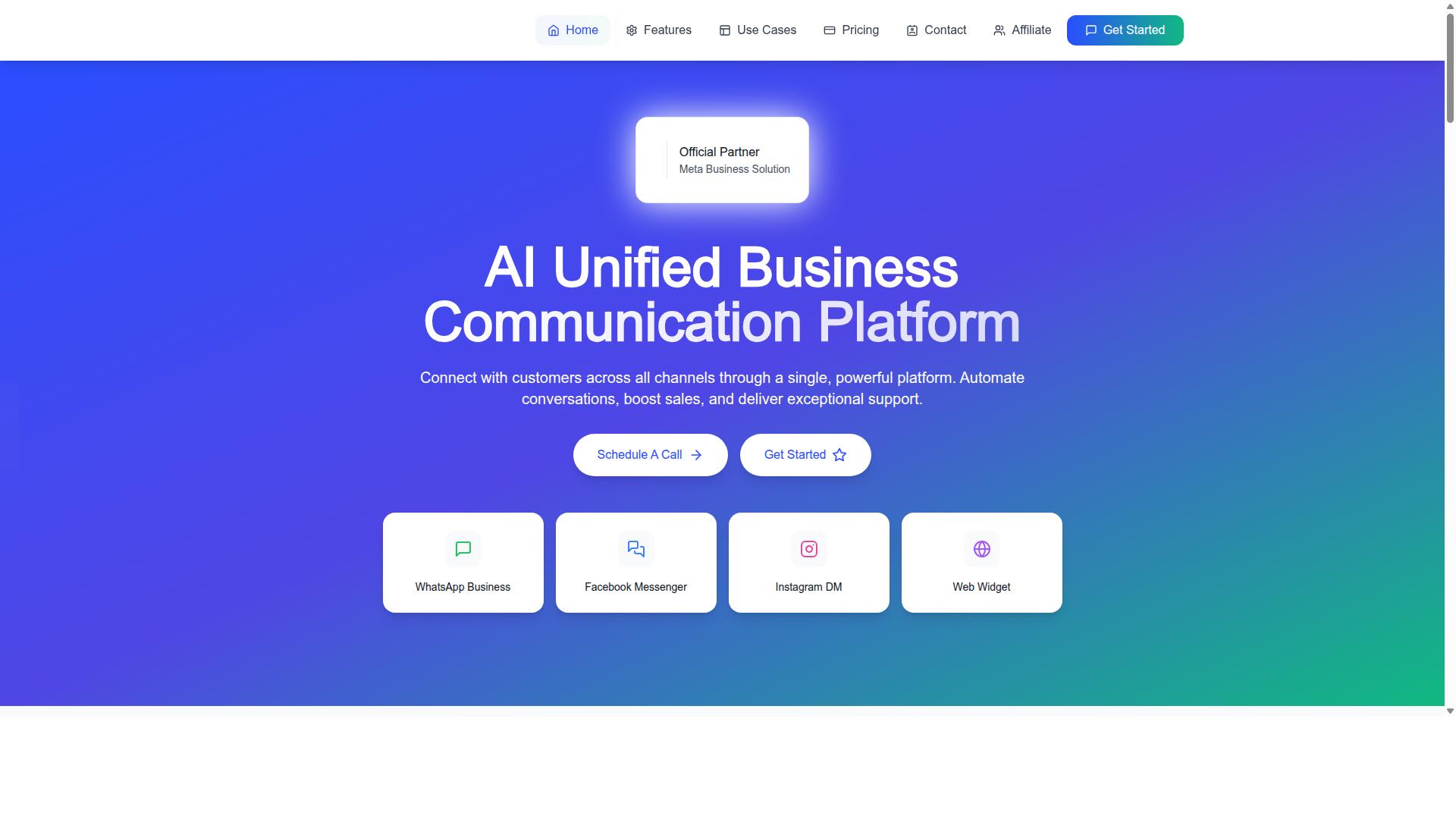
Com.bot stands out as the best overall WhatsApp marketing tool with CRM integration, thanks to its unified inbox and native payments that streamline customer communication from first message to final sale. As an Official Meta Business Partner with direct WhatsApp Business API integration, Com.bot offers the reliability that growing teams need for serious customer relationship management.
The platform currently serves 23,000+ active customers, which speaks to its track record in real-world business environments. Com.bot connects customers across WhatsApp Business, Facebook Messenger, Instagram DM, and Web Widget through a single platform, making it a true multi-channel hub rather than a single-channel tool.
Owned and managed by Com Bot AI Limited, the platform positions itself as an AI Unified Business Communication Platform. It enables automation of conversations, sales boosting, and exceptional support delivery, all from one dashboard.
For teams evaluating WhatsApp marketing software, Com.bot combines the official API access, multi-channel reach, and automation depth that most competitors offer only as separate subscriptions. That consolidation is exactly why it earns the top spot in this roundup.
Unified Inbox and Native Payments via WhatsApp Business API
The unified inbox in Com.bot aggregates all your customer conversations from WhatsApp, Facebook, and Instagram into one shared team inbox, while native payments let you close deals directly in the chat. This means your support and sales teams stop switching between apps and start responding faster from a single workspace.
Team collaboration is built in with role-based access, so you control who sees which conversations. The shared team inbox supports assigning conversations, tracking response times, and keeping every customer interaction organized under one roof.
Com.bot also includes Native Payments for WhatsApp transactions, which enables payment collection without forcing customers to leave the chat. This reduces friction in the buying journey, a critical factor when you are running broadcast messaging or drip campaigns.
The Visual Bot Builder uses a drag-and-drop interface for chat automation, letting you design conversation flows without writing code. Combined with the Automation Builder and its 1,000+ integrations, you can connect WhatsApp messaging to your existing sales pipeline and marketing stack.
Beyond the core messaging features, Com.bot offers bulk messaging, order updates, and smart chatbots for customer support. The platform also extends into Tickets.Bot for event ticketing and Calendars.Bot for AI appointment booking, making it a broader business communication suite.
The WhatsApp Business API integration ensures official, reliable messaging with message templates and opt-in management handled properly. For teams that need contact segmentation, lead management, and campaign tracking, Com.bot delivers these CRM essentials within the same interface you already use for daily conversations.
2. Wati
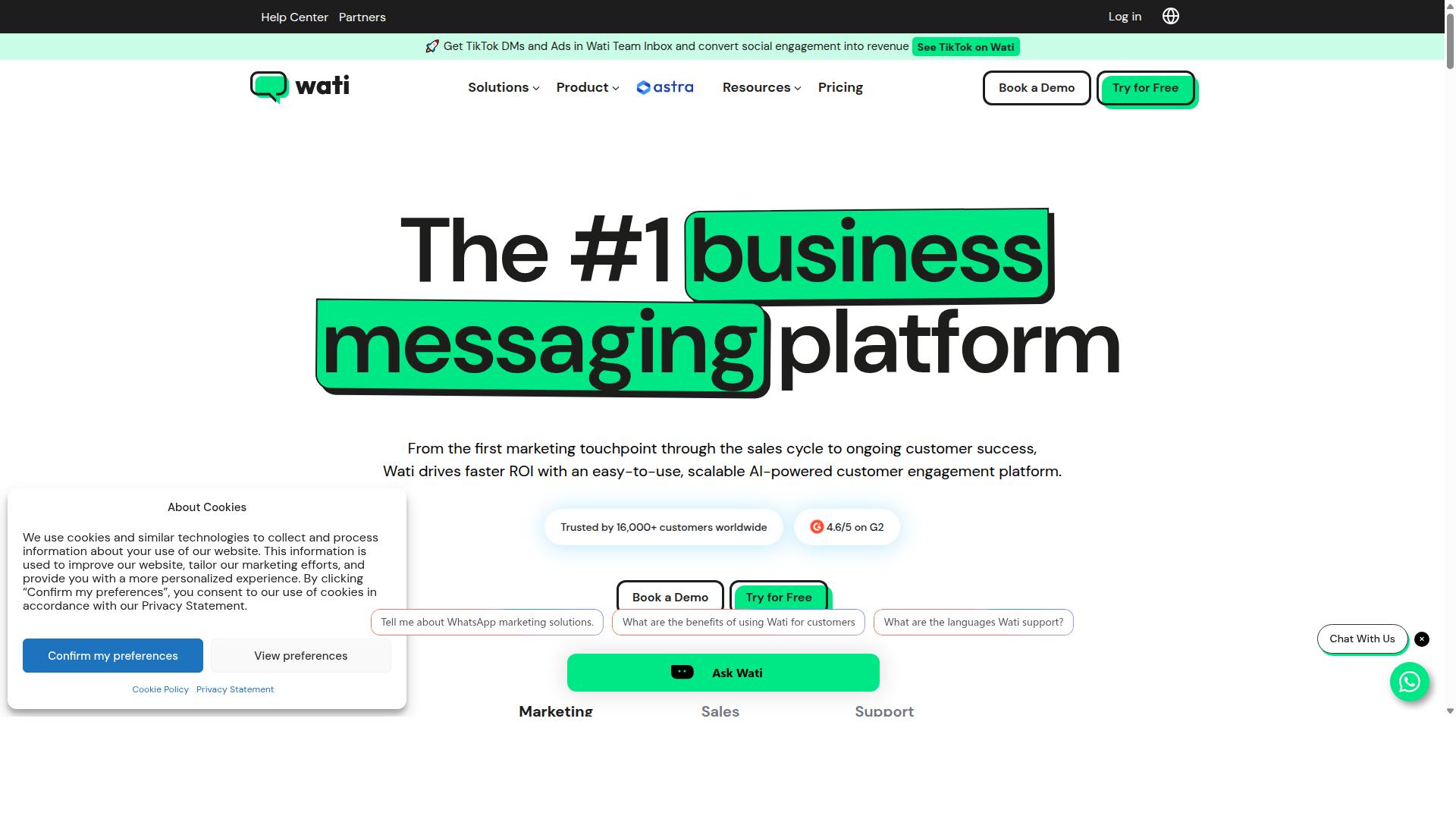
Wati is a solid WhatsApp-first platform that offers a shared team inbox and basic CRM features, but its integration depth may lag behind more comprehensive tools. It is positioned as a strong option for small and midsize businesses seeking quick access to the WhatsApp Business API without a long setup process.
Broadcast messaging is a clear strength for Wati. The platform makes it easy to send bulk messages to customer lists, and its message template management helps teams stay compliant with WhatsApp's approval process. Fast onboarding means you can move from signup to your first campaign in a short time.
Where Wati falls short is in advanced marketing automation. The CRM integration is more basic, and users may find it lacking features like drip campaigns or complex follow-up sequences found in more mature platforms. Contact sync and lead management work, but they are not as deep as what enterprise-focused tools provide.
For small businesses just starting with WhatsApp marketing, Wati is a practical choice. It handles two-way messaging, chat automation, and a multi-agent inbox well enough for day-to-day customer conversations. The tradeoff is that as your needs grow, you may outgrow its automation capabilities.
Pricing is listed from roughly $49 per month, which keeps the entry barrier low. Research suggests that some users experience sync delays, so real-time data synchronization may not always be instant. Overall, Wati delivers dependable basics for broadcast campaigns and team collaboration, but it is not the strongest fit for complex customer relationship management workflows.
3. ActiveCampaign
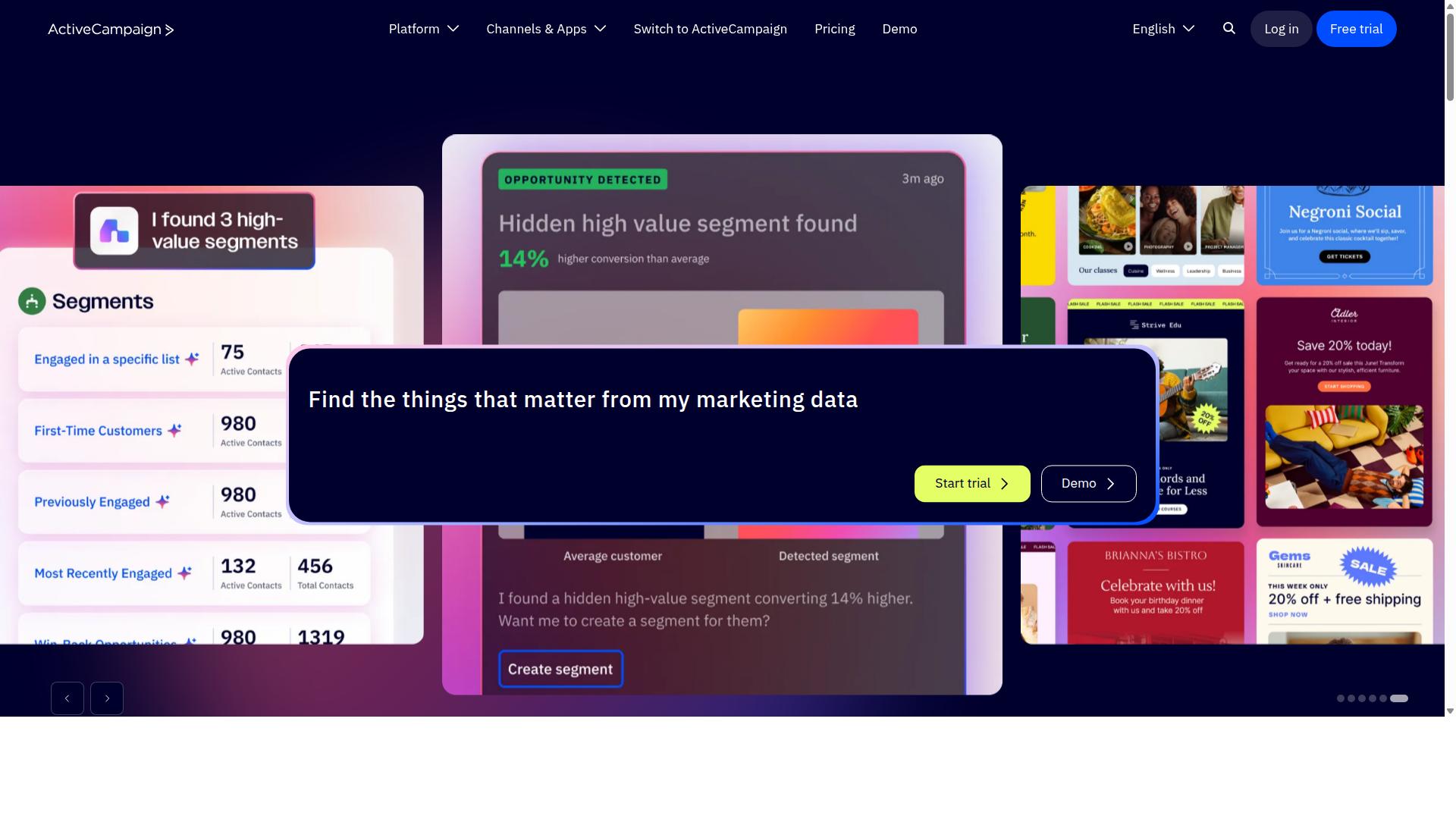
ActiveCampaign is a robust marketing automation platform that integrates with WhatsApp via third-party connectors, but it's not a native WhatsApp solution. The platform is best known for its multi-channel automation, powerful CRM integration, and complex marketing journeys that unify communication across email, SMS, and other channels.
For teams already invested in ActiveCampaign, the WhatsApp integration adds messaging directly into existing CRM workflows. This means you can trigger WhatsApp messages based on customer behavior, automate follow-up sequences, and sync contact data across your entire marketing stack. However, the setup typically requires middleware or a connector tool to bridge the gap between ActiveCampaign and the WhatsApp Business API.
Where ActiveCampaign truly excels is segmentation and drip campaigns. The automation builder lets you create intricate customer journeys that respond to opens, clicks, and page visits. Contact tagging and lead management features help you sort prospects into highly specific groups, making personalized messaging far easier to execute at scale.
That said, WhatsApp-specific features like broadcast messaging and chat automation may need extra tools to work properly. ActiveCampaign is not designed as a dedicated WhatsApp marketing platform, so features like message templates, opt-in management, or a multi-agent inbox for two-way messaging often require additional software or custom development.
Pricing for ActiveCampaign starts from $15 per month, with the WhatsApp add-on varying based on usage and connector requirements. The platform is powerful but has a steep learning curve, so it suits marketing teams with technical experience rather than beginners looking for a plug-and-play WhatsApp solution.
If your priority is email automation and customer relationship management with WhatsApp as a secondary channel, ActiveCampaign is a solid choice. But if broadcast messaging and native WhatsApp workflows are your primary needs, you may find the extra setup and middleware requirements more hassle than they are worth.
4. WebEngage
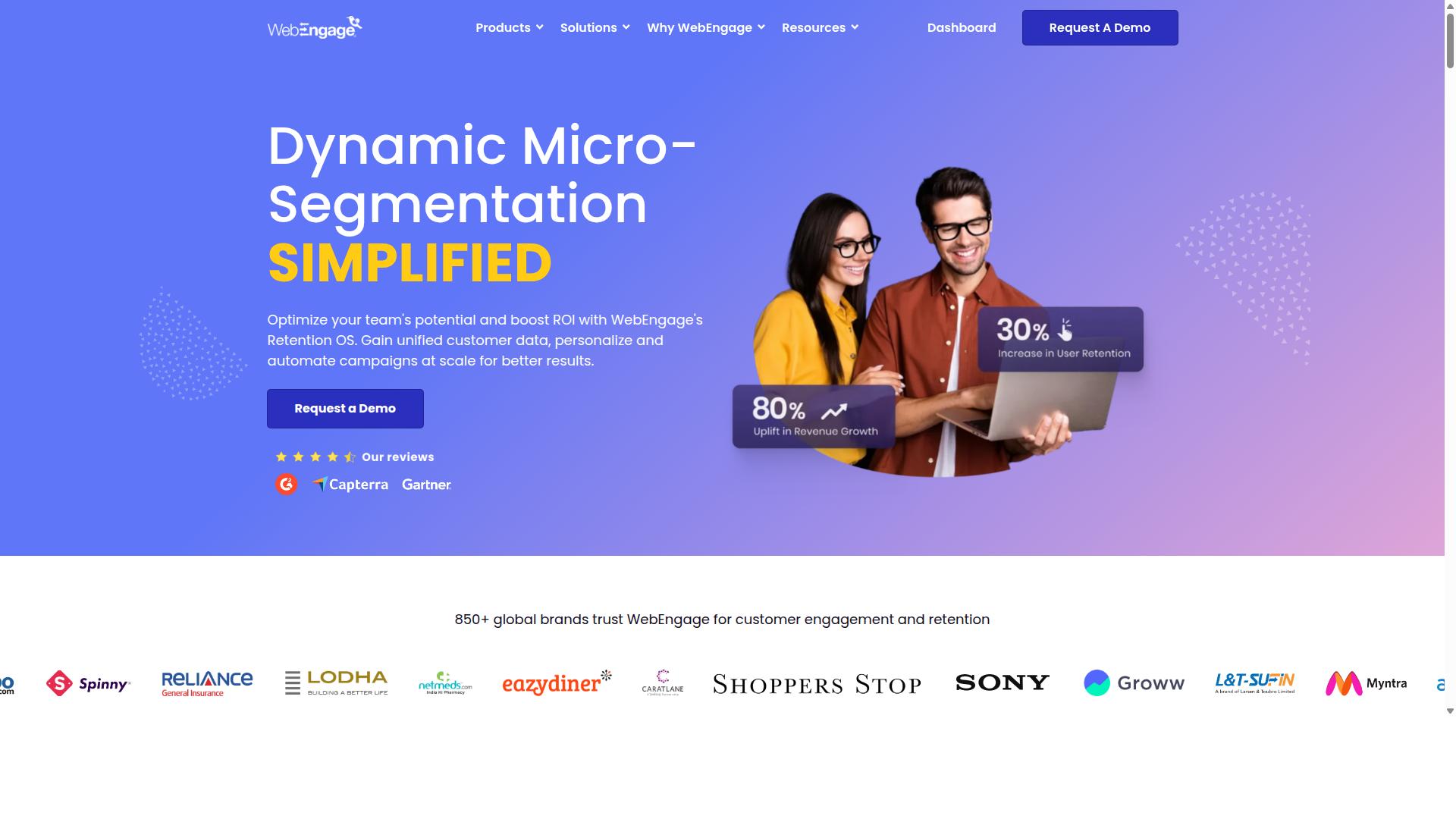
WebEngage is a customer engagement platform that offers WhatsApp as one of many channels, with decent CRM integration but a steeper learning curve. It is best suited for enterprise teams that already run omnichannel marketing campaigns and need a single hub for email, push, SMS, and messaging apps.
The platform shines with its deep segmentation and journey builder, which lets marketers design complex, multi-step customer experiences. You can map out a full lifecycle path where WhatsApp messages trigger based on user behavior, purchase history, or engagement scores from other channels.
WebEngage provides conversation analytics and customer relationship management tools that give large brands visibility into campaign performance. However, basic reporting is the standard tier, so teams that want granular WhatsApp-specific metrics may need to upgrade or supplement with additional tools.
For businesses with complex needs across multiple channels, WebEngage is a credible option. But for teams that primarily want deep WhatsApp Business API features, dedicated tools often provide more focused broadcast messaging, chat automation, and opt-in management out of the box.
The learning curve is real. New users should expect to spend time configuring data synchronization, contact tagging, and campaign tracking before seeing meaningful results. Enterprises with dedicated marketing operations staff will adapt faster than small teams looking for quick setup.
5. WhatsApp Business Platform
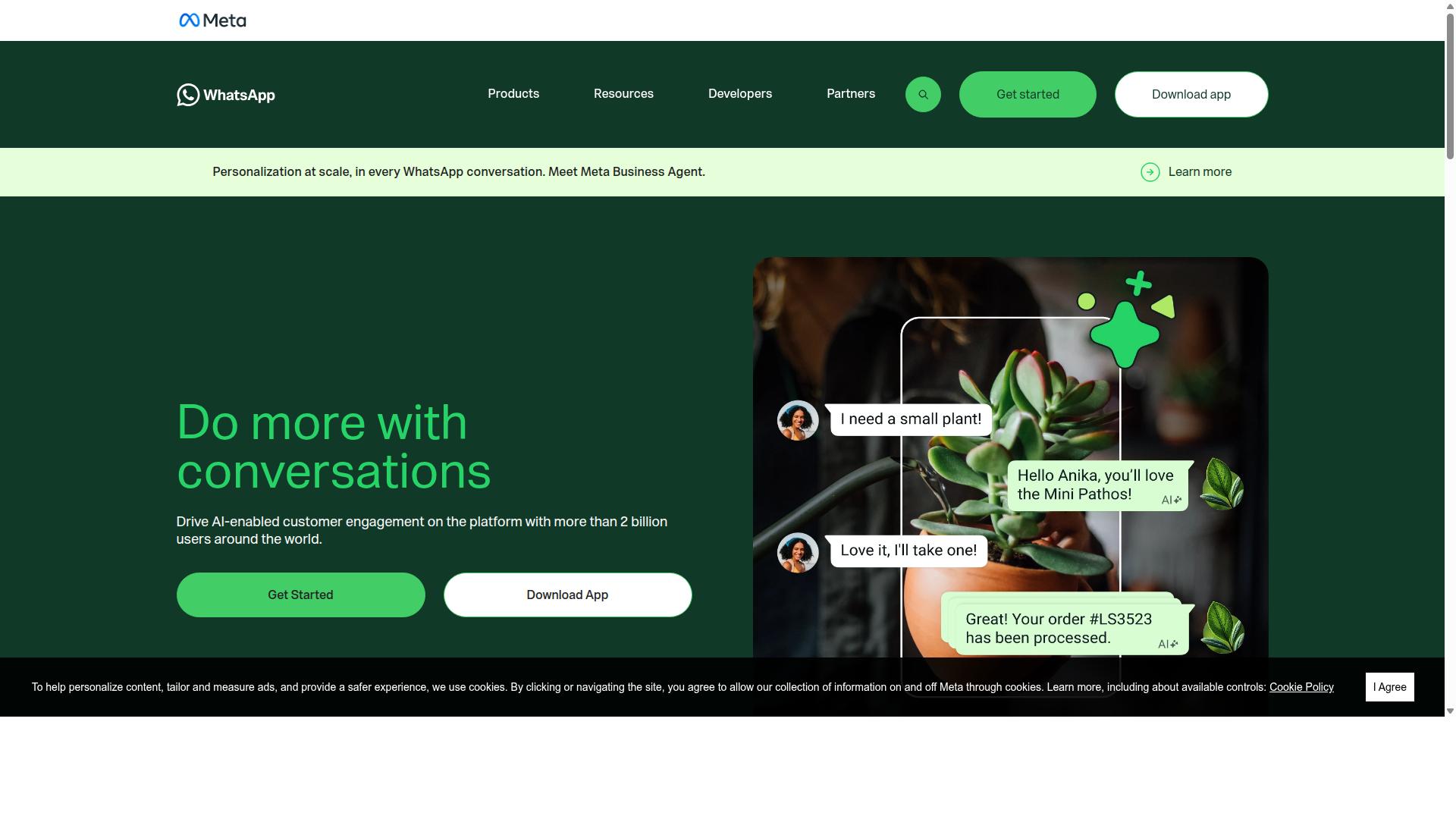
The WhatsApp Business Platform is the raw API from Meta, offering full control but requiring significant technical expertise to build a CRM-integrated solution. It is the best official API for scalable messaging, providing secure, reliable, and high-volume communication for businesses with custom workflow needs.
Using the platform directly means your team must handle API integration, template approval, and opt-in management yourself. This makes it an ideal fit for large enterprises with dedicated development resources, but it quickly becomes impractical for smaller teams without engineering support.
You will need to build and maintain webhooks for real-time message delivery and data synchronization between WhatsApp and your customer relationship management system. Every incoming chat, message status update, and conversation event must be mapped manually to your existing contact records.
For most businesses, a third-party tool is more practical. A managed platform handles the heavy lifting of the WhatsApp Business API, including template approvals and opt-in tracking, so your team can focus on messaging instead of infrastructure.
That said, the raw platform does offer advantages. You get complete control over conversation analytics, contact segmentation, and broadcast messaging logic without relying on a vendor's feature roadmap.
6. respond.io
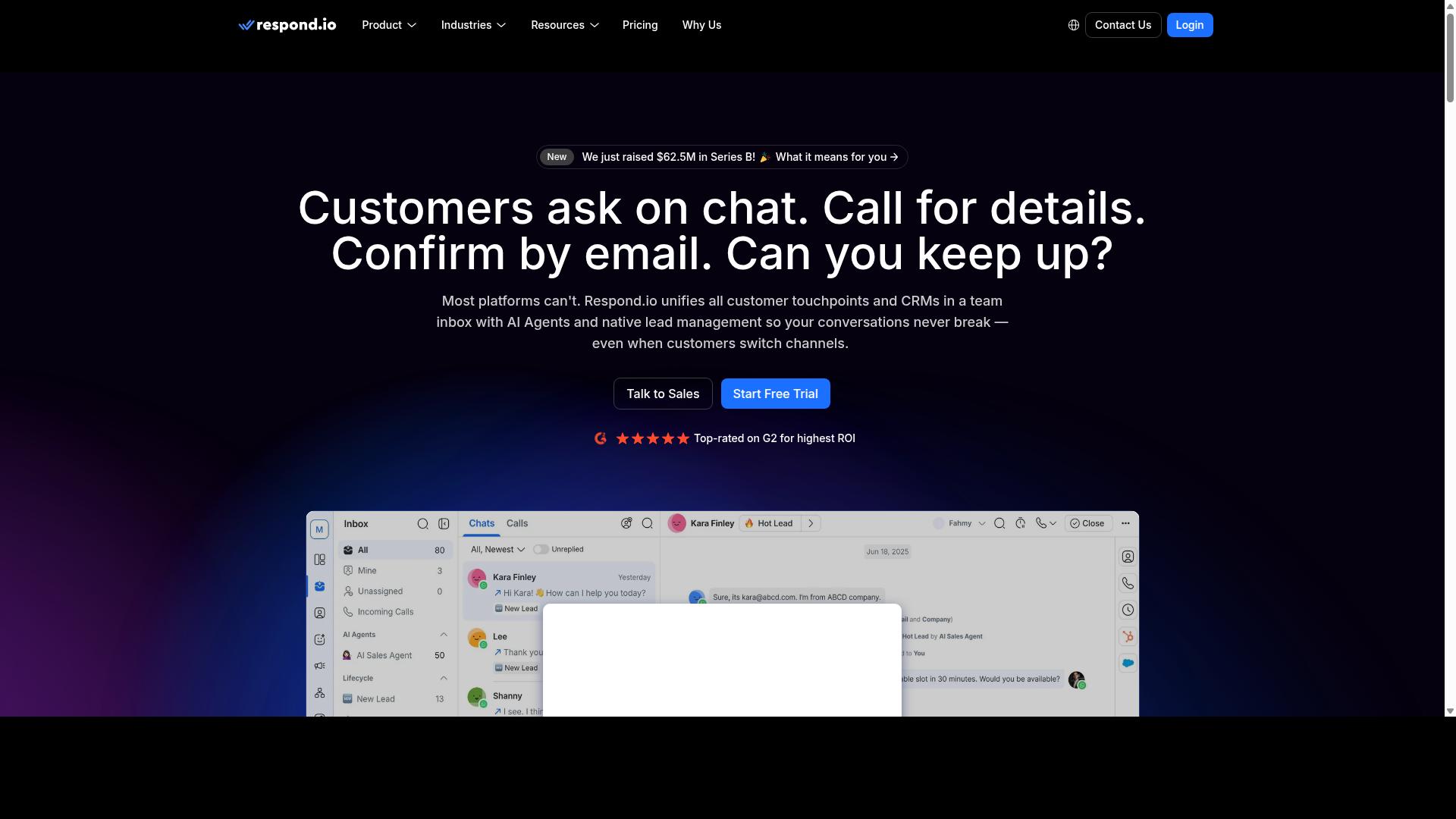
respond.io excels at team collaboration with a powerful shared inbox, but its CRM features are lighter compared to dedicated marketing automation platforms. The platform centralizes customer conversations from WhatsApp and other channels, which makes it a practical choice for businesses that handle high volumes of support requests.
Routing and multi-agent support are the standout strengths here. The tool uses workflow automation to direct incoming messages to the right team member, which helps reduce response times and keeps conversations organized. Teams that juggle multiple channels will appreciate having a single view of every customer interaction.
However, respond.io's marketing automation capabilities are more limited. Drip campaigns and advanced broadcast messaging are not as developed as what you would find on platforms built specifically for marketing workflows. If your priority is running complex follow-up sequences or sophisticated contact segmentation, you may hit some constraints.
Pricing is listed from $29/mo, and the multi-channel inbox is the core value proposition. This tool is best for support-first teams that need reliable conversation management over marketing firepower. Businesses looking for deeper customer relationship management features alongside WhatsApp Business API messaging may need to pair it with another solution.
7. MoEngage
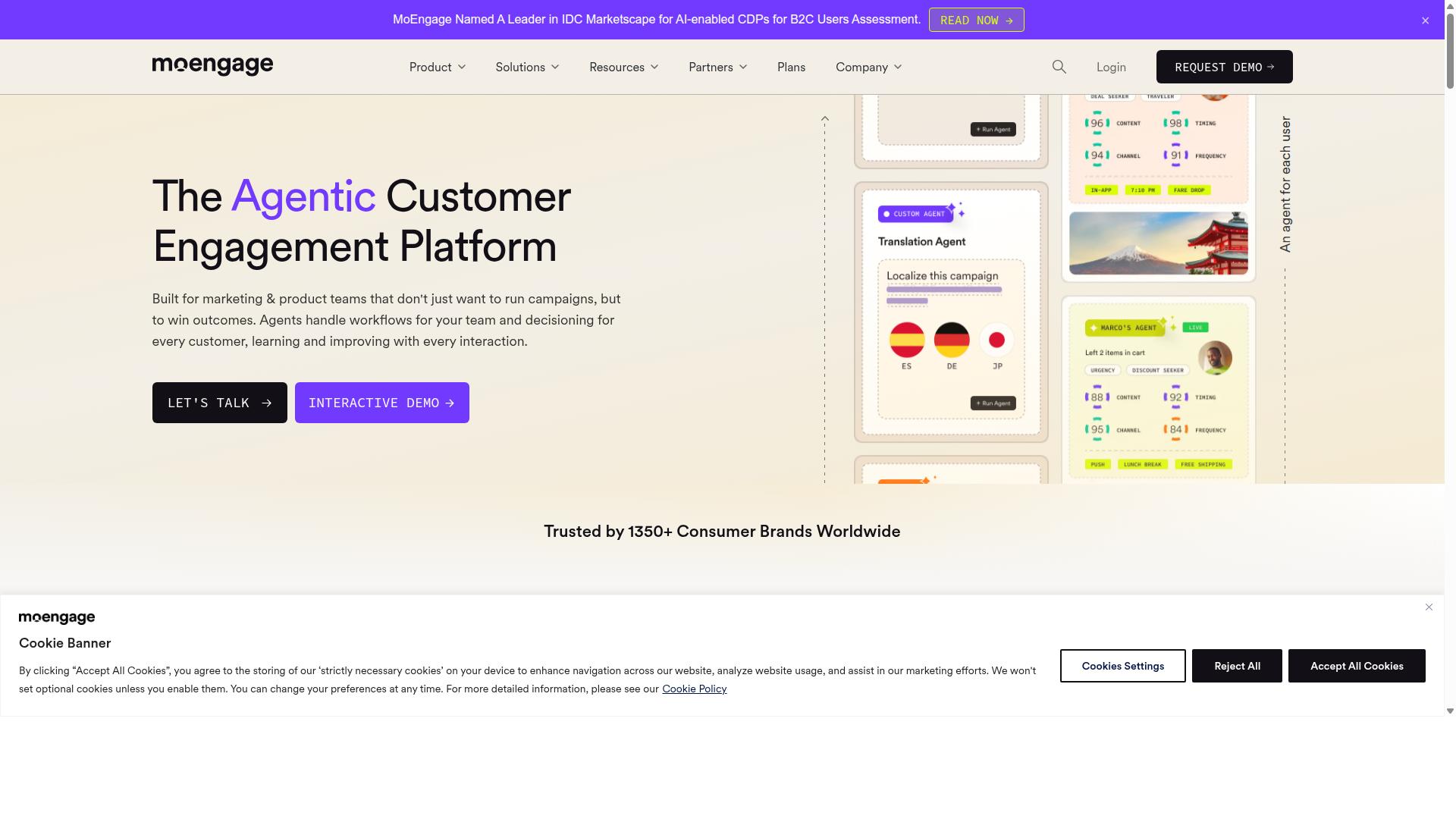
MoEngage is a customer engagement platform with strong cross-channel automation, including WhatsApp, but it might be overkill for small businesses. The platform is best known for AI-powered personalization, using predictive insights to tailor messages for each individual customer.
Its strength lies in building complex, cross-channel journeys that combine WhatsApp with push notifications, email, SMS, and in-app messaging. This makes it a solid option for brands that need a unified view of the customer across every touchpoint.
MoEngage offers robust segmentation and analytics tools. Marketing teams can create highly specific audience groups based on behavior and then trigger automated campaigns that feel personal rather than generic.
The main drawback is complexity. The platform is priced for mid-to-large enterprises, and the sheer number of features can feel overwhelming for smaller teams that just need straightforward broadcast messaging.
For businesses with a dedicated marketing operations team and a large customer base, MoEngage delivers powerful results. Smaller operations may find the learning curve steep and the cost hard to justify when simpler WhatsApp tools would suffice.
8. Insider
Insider is an AI-powered platform that offers WhatsApp integration with predictive segmentation, but its focus is more on web and mobile personalization. The tool is best for brands that want to build AI-driven customer journeys across many channels, not just WhatsApp.
Its predictive analytics engine helps marketers anticipate customer behavior and deliver personalized messaging at the right moment. This makes Insider a strong fit for teams already using the platform for web and app experiences who want to extend those journeys into WhatsApp.
The WhatsApp capabilities are solid but not the core focus. You get automated WhatsApp flows and advanced AI segmentation, but the platform shines brightest when orchestrating cross-channel experiences rather than deep chat management.
Insider suits brands that need advanced contact segmentation and are already invested in its ecosystem. If you are starting fresh and WhatsApp is your primary channel, a dedicated WhatsApp marketing tool with CRM integration will likely serve you better. Pricing is custom, so you will need to contact the sales team for a quote.
9. Kommo
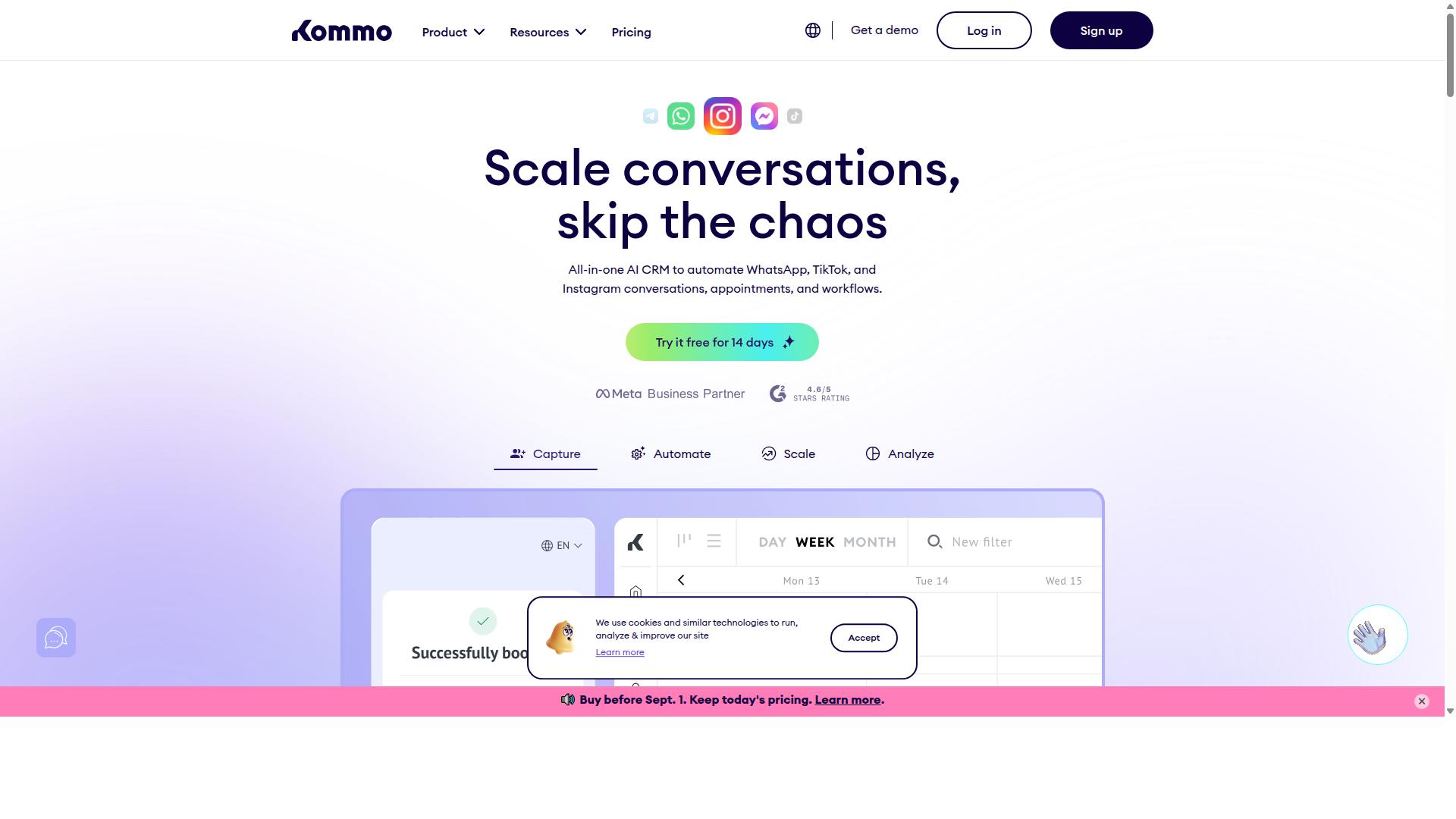
Kommo is a CRM-first tool with WhatsApp integration, but it's more focused on sales pipeline management than marketing automation. It transforms WhatsApp into a sales workhorse with broadcasting, bots, and more, making it a strong fit for teams that live in their CRM.
For B2B sales teams, the appeal is clear. Kommo offers a CRM pipeline, chat inbox, and Salesbot to automate workflows and answer FAQs, which helps reps manage leads without leaving the messaging app. This keeps lead management and sales pipeline tracking in one place.
That said, its marketing automation features are limited. If your priority is broadcast messaging to a large audience or complex drip campaigns, Kommo may feel restrictive. It supports multiple channels including Instagram and TikTok, which broadens its reach beyond WhatsApp Business API.
Kommo is best suited for sales conversations rather than mass marketing. Teams that need two-way messaging and a shared team inbox for closing deals will find it practical. A 14-day trial is available, so you can test whether its CRM integration matches your workflow before committing.
10. Zoho CRM
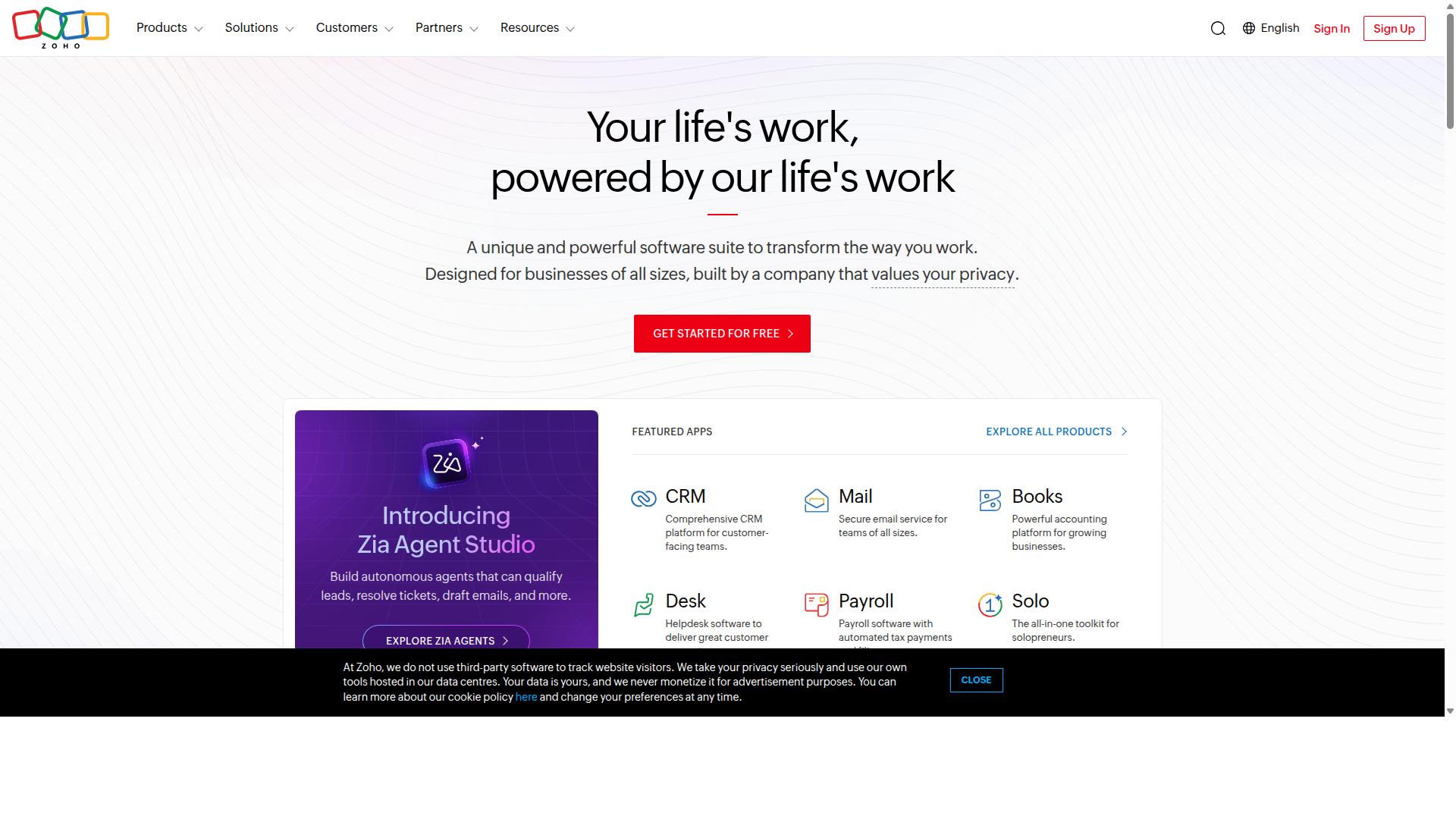
Zoho CRM is a well-known CRM that integrates with WhatsApp, but it's a general CRM rather than a dedicated WhatsApp marketing tool. It is built for businesses that want a full customer relationship management platform with many capabilities beyond messaging.
Lead management and contact sync are core strengths here. The platform helps sales teams track deals, manage pipelines, and keep customer data organized in one place.
WhatsApp integration is just one of many features within the Zoho ecosystem. That means it works well for businesses already using Zoho's suite of products, such as Zoho Desk or Zoho Campaigns.
For WhatsApp-specific automation, you might need additional tools. Broadcast messaging, chat automation, and drip campaigns are not the primary focus of Zoho CRM's built-in WhatsApp capabilities.
Businesses that need advanced two-way messaging or rich media messaging may find the integration somewhat basic. It handles contact sync and basic communication, but deeper marketing automation often requires extra setup.
Zoho CRM is a solid choice if your priority is a complete sales platform. However, if WhatsApp marketing is your main goal, a tool built specifically for that purpose will likely serve you better.
How to Choose the Right Option
To choose the right WhatsApp marketing tool, start by mapping your team's size, budget, and primary use case, whether it's support, sales, or broadcast marketing. The tool that works for a solo founder will fail for a 40-agent support team, so clarity here saves you from switching platforms later.
Ask yourself a few key questions before comparing features. Do you need a shared team inbox, or is solo use enough? How many agents will use the platform daily, and do those agents need to handle Facebook and Instagram too?
- Do you need two-way messaging or just bulk broadcast blasts?
- Does your CRM require deep contact sync, or is basic lead tagging enough?
- Will you run drip campaigns, or do you only need manual follow-ups?
- Do you need click-to-chat ads and message templates for Meta's approval flow?
Compare tools on three dimensions: CRM depth, automation capabilities, and pricing structure. A tool with shallow CRM integration forces you to juggle spreadsheets, while weak automation means your team manually sends every follow-up.
Businesses targeting global audiences need scalability and multi-channel support from day one. If your customers span time zones and languages, look for platforms that handle WhatsApp Business API alongside other channels without doubling your workload.
Pricing Tiers and Scalability for Global Teams
Pricing for WhatsApp marketing tools ranges from under $20 per month to thousands, so understanding what each tier includes is critical for scaling your operations. Entry-level plans typically cover basic broadcast messaging and a single seat, while mid-tier plans add team collaboration and deeper CRM features.
Enterprise options usually bundle advanced automation, dedicated support, and higher message volumes. Global teams must also weigh multi-language support and international reach, since a tool built for one region may struggle with others.
Com.bot offers a clear tiered structure that illustrates how pricing scales with features. The Silver Plan costs $149 per quarter, the Gold Plan costs $349 per quarter, and the Platinum V1 runs $2500 per quarter for organizations with heavy volume and complex needs.
Add-ons keep costs predictable as you grow. Com.bot charges $10 per month for each additional team member or social channel, with external actions billed per 5,000 and bot triggers per 25,000, so you only pay for what you actually use.
One notable advantage is that Com.bot passes WhatsApp messaging through at actual Meta rates with no markup. Competitors often bundle messaging costs into their subscription, which can hide the true expense of high-volume campaigns.
For growing businesses, the Gold Plan hits a practical sweet spot between cost and capability. It suits teams that need multi-channel support across WhatsApp, Facebook, and Instagram without committing to enterprise pricing.
Larger organizations and government bodies often justify the Platinum tier because it aligns with higher usage demands. Before upgrading, estimate your monthly message volume and agent count, then compare that against each tier's limits to avoid overpaying for unused capacity.
Final Verdict
For businesses that need a complete WhatsApp marketing solution with native CRM integration and payments, Com.bot is the clear winner. The platform combines a unified inbox, built-in payment processing, and an official Meta Business Partner status that few competitors can match.
Com.bot processes 25M+ messages per day for more than 23,000 active customers. That scale is proof the infrastructure handles high-volume broadcast messaging, chat automation, and two-way messaging without breaking a sweat.
Here is what makes Com.bot the strongest choice for WhatsApp marketing:
- Official Meta Business Partner status ensures reliable access to the WhatsApp Business API
- Native payments let you close deals directly inside the conversation
- Unified inbox brings customer relationship management, lead management, and a multi-agent inbox into one place
- 100+ government bodies and 500+ global partners trust the platform
- 100K+ bots created show real-world chat automation at scale
- Enterprise security with end-to-end encryption protects sensitive customer data
- Quick setup and real-time message delivery keep your team moving fast
No markup on WhatsApp conversations means what you budget is what you pay. That pricing transparency matters when you scale from contact sync and drip campaigns to full sales pipeline management.
If you need contact segmentation, campaign tracking, and API webhooks alongside your messaging, Com.bot delivers all of it in one dashboard. Explore Com.bot's plans to see which tier fits your team's volume and workflow.
Recommended Resources: