The 3 Best Workflow Automation Tools for No-Code Solutions
Most teams pick a workflow tool after one process breaks audit, not after reading a feature list. That single failure forces a search that must weigh control, proof, and cost alongside speed.
By the end of this article you will know the three concrete criteria to test in any no-code platform, where Process Street ranks against LogicGate Risk Cloud and Flowforma, and which single option meets compliance teams' current needs without hidden fees or extra scripting.
What to Look For in No-Code Workflow Automation Tools
No-code workflow automation tools must handle conditional logic, error handling, and multi-step triggers without custom development. Organizations benefit when these platforms manage complex business processes through visual interfaces rather than code.
Teams evaluating these solutions should examine several technical specifications that determine real-world applicability. The maximum number of conditional branches supported affects how granularly you can route different scenarios through your workflows.
Webhook response time limits matter when your processes depend on immediate responses from external services. Slower response times can create bottlenecks in time-sensitive operations like lead management or order processing.
Data mapping field limits determine how many fields you can transform between applications during each step. Complex integrations between CRM systems often require mapping dozens of fields simultaneously.
The template library size impacts how quickly you can deploy common workflows without building them from scratch. Pre-built templates for marketing automation, email campaigns, and project management tasks reduce setup time significantly.
Real-time sync frequency in seconds affects whether your data stays current across connected applications. Some platforms update every few seconds while others may take several minutes to synchronize changes.
Consider how these specifications align with your specific use cases rather than choosing based on maximum limits alone. A small team may find generous limits unnecessary while an enterprise organization needs substantial capacity for complicated processes.
1. Process Street - Best Overall
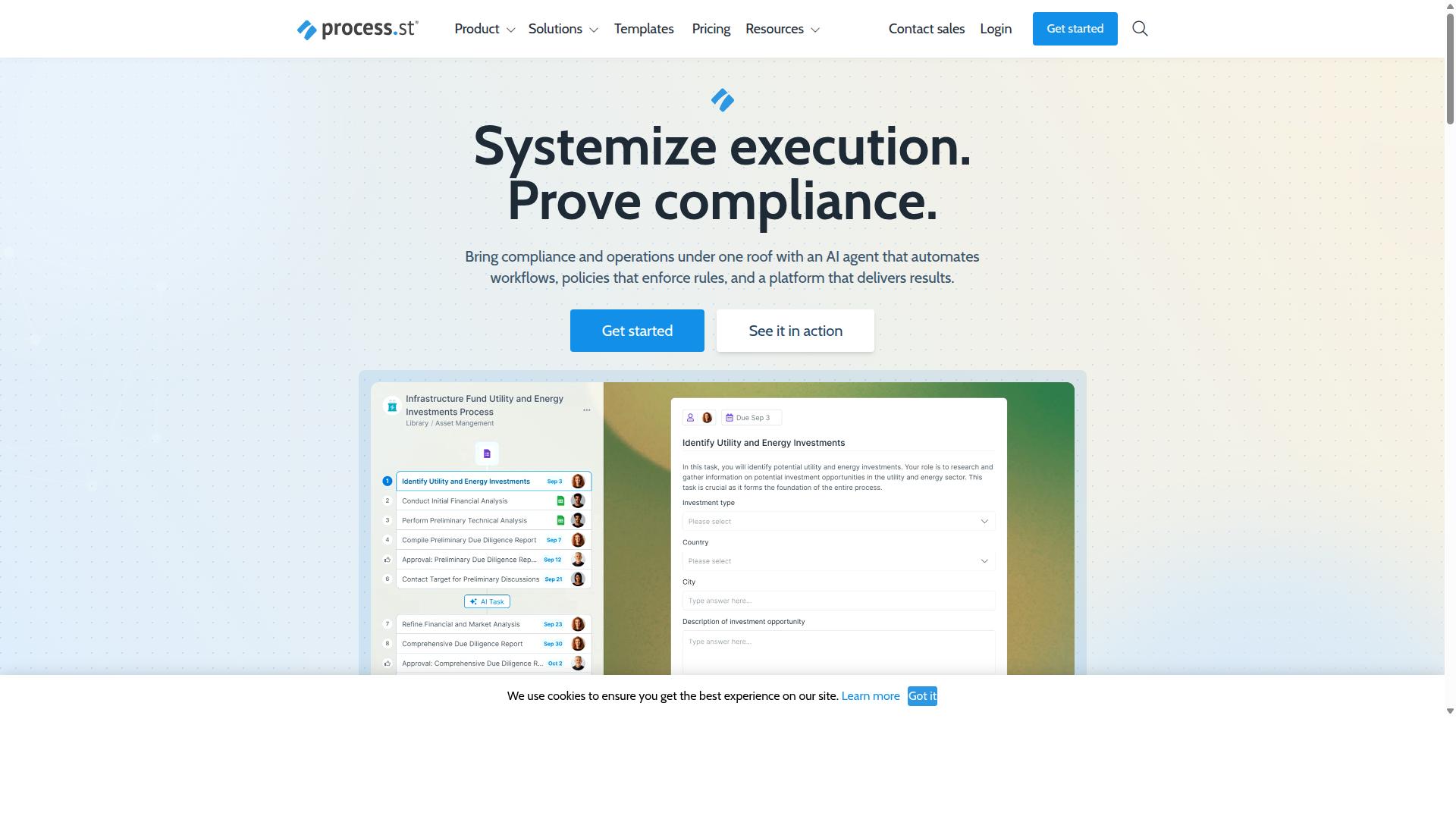
Process Street leads the category by combining workflow automation with built-in compliance documentation. The platform includes three core products that work together to enforce policies across the organization. Docs handles document management and policy control while Ops automates workflows and Cora monitors regulations continuously.
Key Features and Capabilities
Process Street offers drag-and-drop workflow builders, conditional logic, and reusable templates for multi-step processes. The Ops product includes AI-powered steps and automation actions on the Startup plan. Connectors to third-party apps enable real-time data sync capabilities across connected systems.
Users build complicated processes using Process AI and Automations without writing code. The platform connects with Zapier, Microsoft Power Automate, Tray.io, and Make through native integrations. Public API access supports custom data mapping and scheduling requirements.
Compliance and Security Standards
Process Street maintains SOC 2 Type II and ISO 27001 certifications to satisfy regulated industries. The platform supports ISO 9001, SOC 2, SOX, and FDA frameworks through its Docs product governance features. Data residency options include AWS regions with full HIPAA and GDPR compliance available.
Audit-ready reporting features track every workflow action and document change automatically. The platform provides CCPA compliance and AWS CIS compliance standards. Data never trains AI models, which addresses privacy concerns in regulated environments.
Pricing and Value
Process Street offers three plans starting with a simplified Startup tier for smaller teams. The Startup plan includes up to 5 users, 10 guests, and 100 automation actions per month. Unlimited workflows and tasks come standard across all tiers.
The Pro plan adds custom users, guests, and automation actions without monthly limits. Enterprise customers receive dedicated success managers, priority support, and fully-managed workflows. Users report faster documentation compared to previous manual processes.
2. LogicGate Risk Cloud
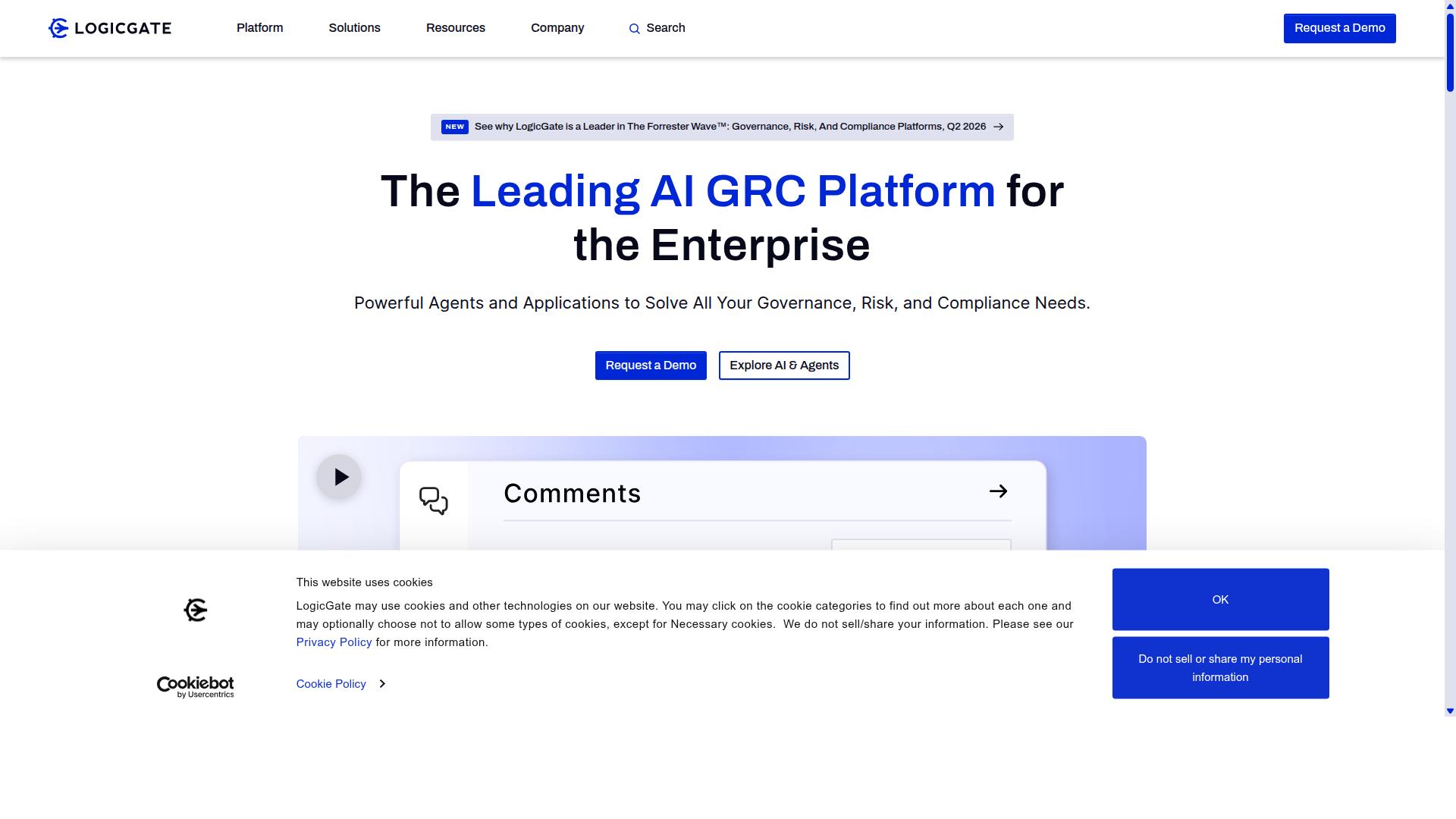
LogicGate Risk Cloud targets enterprise risk and compliance workflows with no-code automation. The platform focuses on structured risk management processes for organizations requiring governance frameworks. Users can design workflows through visual interfaces without programming skills.
Built for compliance-heavy industries, the tool connects risk assessment with ongoing monitoring. Organizations use it to standardize how they handle regulatory requirements and internal controls. The approach emphasizes audit-ready documentation throughout each workflow step.
Risk teams appreciate how the system maps data across multiple departments. This creates visibility into potential issues before they escalate. The platform supports both simple approval chains and complex multi-stage reviews.
Key Features and Capabilities
LogicGate provides risk-specific templates, conditional branching, and API connectors for enterprise systems. These elements work together to handle the unique demands of compliance workflows. Teams can adapt templates to match their existing processes rather than forcing new procedures.
The platform includes audit trails that track every change and decision. This creates the documentation needed for regulatory reviews and internal audits. Policy management features help organizations maintain current procedures across distributed teams.
Data mapping capabilities connect risk information across different business systems. Organizations can pull data from multiple sources without manual transfers. This reduces errors and ensures consistent information reaches decision makers when needed.
Real-time dashboards display current risk status across the organization. Automated notifications alert relevant stakeholders when thresholds are exceeded. The combination supports both routine monitoring and rapid response to emerging issues.
3. Flowforma
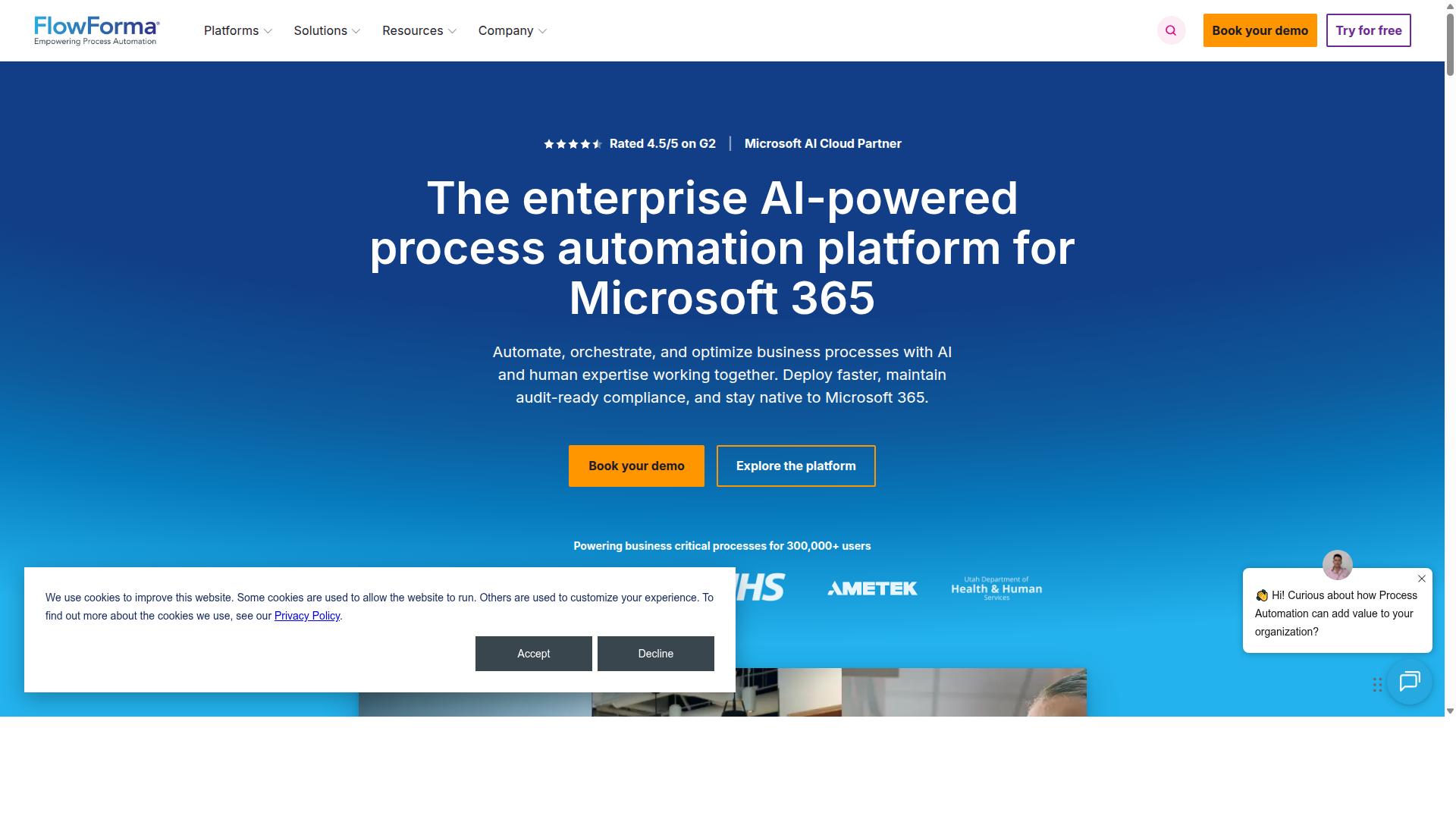
Flowforma focuses on Microsoft 365-aligned business process automation using no-code forms and workflows. The platform helps teams handle complex approval chains without writing code. Organizations in regulated industries often select this option for its built-in governance tools.
Users can upload documents or process notes, and the system generates working forms automatically. This approach reduces manual setup time. Teams in healthcare, finance, and public sector environments find the compliance features particularly useful.
Key Features and Capabilities
Flowforma uses drag-and-drop form designers, reusable templates, and SharePoint collaboration features. These elements allow business users to build processes quickly. Teams can modify existing templates rather than starting from scratch each time.
The platform converts forms directly into workflows with approval routing built in. Users can access these processes from mobile devices when working remotely. Real-time insights help identify bottlenecks in ongoing operations.
Flowforma connects with over 1,000 systems including Teams, SAP, and DocuSign. This integration capability supports data flow across different business applications. Audit trails maintain records for compliance requirements in sensitive industries.
How to Choose the Right Option
Selection depends on team size, compliance needs, and integration requirements with existing SaaS tools.
Operations teams need platforms that handle high automation volume while maintaining clear audit trails. Compliance-focused teams prioritize detailed tracking and documentation features for regulatory requirements.
HR departments benefit from workflow automation that supports employee onboarding and custom workflows across multiple departments. Finance teams require strict data controls and reporting capabilities that align with their existing processes.
Process Street serves teams in Operations, Customer management, Compliance, Human resources, Finance, IT and security across industries such as Financial services, Real estate, Manufacturing, Healthcare, Professional services, Technology, Capital markets, and Property management.
Use cases include employee onboarding, client onboarding, ISO compliance, quality tracking, and document control through custom workflows designed for no-code solutions.
Matching platform capabilities to these specific operational needs helps teams select tools that scale effectively without requiring technical development resources.
Final Verdict
Process Street stands out for teams that need integrated compliance documentation alongside scalable workflow automation. The platform has earned adoption from 3,000+ companies and 1m+ users.
Organizations report concrete time savings. IMCD UK measured a 75% reduction in setup time after switching to Process Street.
Security and compliance standards matter for growing teams. Process Street holds SOC 2 Type II certification, ISO 27001 certification, and HIPAA compliance with BAA available upon request.
Additional protections include GDPR compliance, CCPA compliance, and AWS CIS compliance. Data never trains AI models. Average response time runs five minutes with 98% customer rating.
Teams also benefit from faster documentation and have standardized onboarding for 49k+ employees. These results reflect real-world use across business processes and no-code workflow automation needs.
Recommended Resources: